Online Exam vs OMR Exam: Differences And When To Use Each
In an online exam, the candidate answers on a screen and the system marks the paper. In an OMR exam, the candidate shades bubbles on a printed sheet that software reads later. Choose online when candidates are spread out or you need results the same day, and choose OMR for an objective paper in one hall with limited internet. India's national tests use both: JEE Main 2026 Paper 1 was computer-based, while NEET UG 2026 was on paper with OMR sheets.
How Does Each Format Work?
In an online exam, a candidate logs in on a computer, reads each question on screen and clicks or types the answer. The system saves the answers and marks them.
In an OMR exam (optical mark recognition), the candidate shades the chosen option on a printed sheet. Staff scan the sheets after the exam, and software compares each mark with the answer key. Eklavya's guide to how OMR sheets are evaluated explains the scanning and checking steps.
Online Exam vs OMR: What Are the Key Differences?
The two formats differ most in when results arrive, what the centre needs and where things go wrong.
| Factor | Online Exam | OMR Exam |
|---|---|---|
| How candidates answer | Click or type on a screen | Shade a bubble on a printed sheet |
| Question types | Multiple choice, plus short and long typed answers | Multiple choice only |
| When results arrive | At the end of the exam | After sheets are collected, scanned and checked |
| What each centre needs | A device, webcam and stable internet per candidate | Printed papers and sheets, a scanner and OMR software |
| Cheating control | Webcam, screen tracking and proctors | Invigilators in the hall |
| Leak risk | No printed paper; each candidate can get a different question set | Papers are printed, stored and moved to centres before the exam |
| Main source of errors | Connection drops, power cuts and server downtime | Faint, incomplete or double marks that the software misreads |
Eklavya's ePareeksha lists random question sets, AI and human proctoring and instant results for online exams.
When Should You Choose an Online Exam?
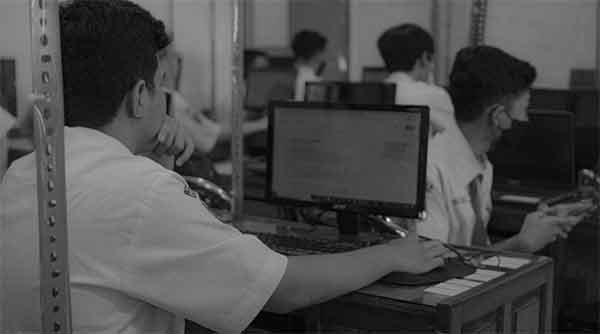
Choose an online exam when candidates sit in different places, when you need results the same day or when the paper needs typed answers.
Remote or scattered candidates. Each candidate needs only a device and a connection.
Randomised papers. A question bank can give each candidate a different set, which makes copying harder.
Several languages. Eklavya's platform lists exams in Hindi, English, Tamil and 15 or more regional languages.
Plan for the weak points before exam day. Each candidate needs a device with a webcam and microphone and a stable connection, and poor internet, power cuts and server downtime are the common failures. Run a mock exam and arrange backup power at each centre. Eklavya's guide on how to conduct an online exam lists the requirements and proctoring options.
When Does an OMR Exam Still Make Sense?
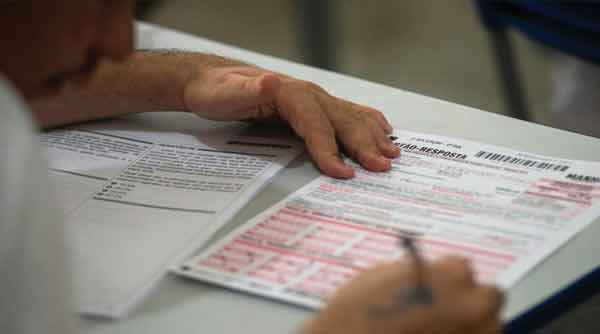
Choose OMR when internet or computers are limited, when a large group sits one paper in one hall and when every question is multiple choice.
Tell candidates what to use. Give a dark ballpoint pen and ask them to fill each bubble fully, because faint or incomplete marks can be misread.
Check the answer key before scanning starts.
Rescan or review any sheet with a double mark or a smudge.
Eklavya's online examination page lists OMR templates of 50, 100 or 150 questions on the same platform as its online exams.
Which Format Do India's Big Entrance Exams Use?
Both formats are in use at the national level. In JEE Main 2026, Paper 1 was computer-based and only the B.Arch drawing test was on pen and paper. NEET UG 2026 stayed on pen and paper, with 180 multiple-choice questions marked on an OMR sheet.
The government confirmed that the original NEET UG paper held on 3 May 2026 had leaked, and the exam was cancelled with a re-exam set for 21 June. Education Minister Dharmendra Pradhan then announced on 15 May 2026 that NEET UG will be fully computer-based from 2027. Check the National Testing Agency's information bulletin for the format of any exam you are preparing for.
Want to run online and OMR exams on one platform? Write to us at info@eklavya.com or call +91 20 2970 8923.
Frequently Asked Questions About Online Exam vs OMR
Neither is secure on its own. An online exam needs proctoring, and Eklavya's guide recommends both live human and AI-based proctoring. An OMR exam needs strict control over printing, storage and transport of papers, and the original NEET UG 2026 exam was cancelled after a paper leak.
No. OMR software reads marked options, so it suits objective questions. Descriptive answers need an examiner to read them on paper or on screen. Eklavya's guide to OMR evaluation software explains what the software reads and how it scores.
Yes, in some cases. Eklavya's online examination page says exams can run on the internet, an intranet or paper. Ask for a demo with your own paper format before you decide.