Traditional ERP Vs SaaS: Scalability, Cost, Migration Risks & Security
Introduction
When businesses compare traditional ERP vs SaaS, the confusion usually starts with one basic question: are these even the same kind of systems?
They’re not.
Understanding the difference between SaaS and ERP is important because this decision affects how you run operations, manage costs, scale teams, and stay compliant over time. Choose wrong, and the system that was meant to simplify work becomes a long-term burden.
In this blog, we will understand both the systems to get a clear idea about which one to choose for your business.

Traditional ERP Vs SaaS
When people compare traditional ERP vs SaaS, they often mix up two very different ideas. One is what the software does. The other is how the software is delivered. That’s where the confusion starts. Once you separate these two, everything becomes easier to understand.
An ERP system is a core business platform. It manages things like accounting, inventory, procurement, production, HR, and reporting. In simple terms, ERP is the system that keeps daily operations moving and connected.
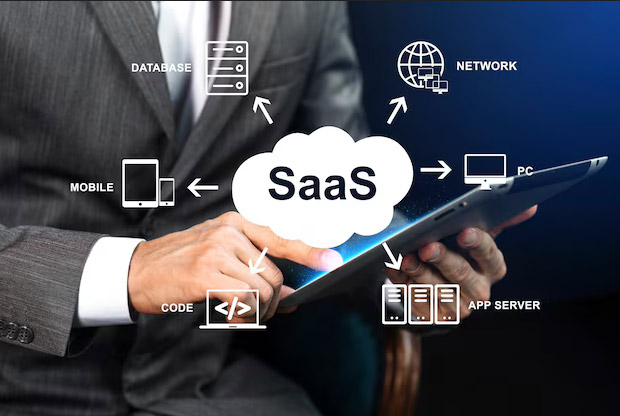
SaaS, on the other hand, is not a type of business software. It’s a delivery model.It describes software that runs online, is paid for through a subscription, and doesn’t require companies to install or maintain servers.
But, at the end of the day when you think of choosing one, cost, scalability, ownership, control…all these become core evaluation pillars.
Here is a side by side comparison:
| Point of Comparison | Traditional ERP | SaaS ERP |
|---|---|---|
| What it is | Business system for managing operations | ERP delivered through the cloud |
| Core Purpose | Process control and data integration | Easy access and faster deployment |
| Hosting | On-premise or private infrastructure | Vendor-hosted cloud environment |
| Access | Internal network or VPN | Web browser from anywhere |
| Ownership | Company controls system and environment | Vendor manages platform and updates |
| Setup effort | Heavy planning and infrastructure work | Minimal setup, faster start |
| Upgrade process | Planned, manual, often disruptive | Automatic and continuous |
| Customisation | Deep and highly tailored | More standard, improving over time |
| Cost structure | High upfront investment + maintenance | Subscription-based operating cost |
| Best suited for | Large enterprises with strong IT teams | Growing, distributed, or agile teams |
Difference Between SaaS And Traditional ERP
You know the biggest difference between saas and erp tarts at the architecture level.
Traditional ERP runs on infrastructure owned or directly managed by the business. This includes servers, databases, and networking. Access is often restricted to internal networks or secured VPNs, which gives organisations tighter control but also adds complexity.
SaaS ERP is hosted in the vendor’s cloud environment. Users log in through an internet browser, much like any other online platform. There is no need to manage servers or hardware internally.
This also changes who is responsible for what.
In traditional ERP:
The vendor manages hosting, updates, and security
New features roll out automatically
The business focuses more on usage and process alignment than system upkeep
In short, traditional ERP gives control and customisation, while SaaS ERP offers speed, simplicity, and reduced IT overhead. When you understand this, you can make smarter decisions.
Which One Fits Your Business More Between SaaS ERP Vs Traditional ERP?
Now that you know the difference between SaaS and ERP, you might have a clear picture if both. But choosing which between the both is not about which is better…its about choosing the system that fits your needs better.
SaaS ERP works best for organisations that value speed, flexibility, and remote access. Especially, if you have remote teams at different locations, SaaS is what you need. It offers real-time visibility into operations. Scaling users up or down is simple, and new features arrive regularly without major disruption.
Traditional ERP, on the other hand, suits businesses that need deep customisation and strict regulatory control. Industries with complex compliance rules or plant-level process variations often prefer on-premise systems where IT has full authority over configuration and data.
Cost, Scalability, And Control Between SaaS ERP Vs Traditional ERP In 2025
Cost looks simple at first, but long-term impact matters more.
With SaaS ERP, costs are spread out through subscriptions. You pay as you grow, and upgrades are included. Over time, this keeps spending predictable and avoids large one-time investments.
Traditional ERP requires a really high upfront investments. There are costs for licences, infrastructure, and upgrades. And it might seem cheaper after deployment, but most ERP projects run over the budget.
Scalability also differs. SaaS ERP allows instant user expansion, while traditional ERP is limited by server capacity and hardware planning.
Control is the trade-off. SaaS vendors manage updates and automation schedules. Traditional ERP gives internal teams full governance. This balance defines the real difference between SaaS and ERP decision for enterprises in 2025.

What’s The Difference Between ERPs And SaaS Solutions In Procurement Management?
ERP procurement modules manages all core business functions. Whereas, SaaS is a delivery model. To explain it better, ERP procurement is part of a larger system that runs the entire business. So an ERP can be delivered as SaaS,but SaaS procurement tools exist independently.
Below is difference between traditional erp vs saas to understand how they handle integration, automation, and control.
| Aspect | ERP Modules | Standalone SaaS |
|---|---|---|
| Scope | Broad (finance + inventory + HR) | Procurement-focused (sourcing + vendors + suppliers) |
| Integration Depth | Deeply integrated with accounting, budgeting, and cost controls in real time | API-based, flexible but configurable |
| Automation | Basic workflows, modular add-ons | End-to-end automation (guided buying, 3-way match) |
| Deployment | Can be on-premise, private cloud, or SaaS-based ERP | Always cloud-based and vendor-managed |
| IT involvement | High involvement | Minimal IT effort as maintenance is handled by the vendor |
| Customizations | Highly configurable to match complex policies and compliance needs | Limited configuration |
| Cost/Setup | High investment needed | Comparitively low |
When Does Traditional ERP Become A Business Liability?
There will come a point where your old ERP will stop being helpful and starts holding you back. Look for these signs to recognise when that happens:
You hit a scalability wall
Your business grows but your ERP can't keep up. You add more users it slows down. More invoices? Payments clear in days. Even though you need more functionality, the ERP was created long before this demand existed. You need new features but the system wasn't built for them. Growth becomes painful instead of exciting.
Security becomes a real problem
Older systems don't get security updates anymore. Hackers know their vulnerabilities. Your data is at risk but patching requires expensive custom work. Compliance gets harder because the system can't meet new regulatory requirements.
Your vendor moves on
The vendor announces end-of-support. No more patches. No more help when things break. You're stuck maintaining a system nobody supports anymore. Finding people who know how to fix it gets expensive and difficult.
Upgrades stop happening
Your team avoids upgrades because something always breaks. And customizations don't work after updates. So, eventually you stop upgrading and your ERP is a liability altogether

How Do Implementation And Integration Work In SaaS ERP?
To implement a SaaS ERP system in an enterprise is actually way easier compared to a traditional ERP setup. Because infrastructure is already in place. There’s no hardware setup or complex installation
Most SaaS ERPs follow a plug-and-play onboarding model. So, all core modules pass throught go live phase quickly. Teams start using the system while configurations continue in parallel.
Integration is API-first. SaaS ERP connects easily with CRM, procurement tools,analytics platforms, and payment systems.
All in all, the biggest advantage of SaaS ERP here is time to value. You don’t have to wait for months to see results. You business can easily get a hold of the system in just a few weeks.
How Do Updates Work In SaaS Vs Traditional ERP?
Updates work very differently in SaaS ERP compared to traditional on-prem ERP.
When we talk updates in SaaS, it happen automatically from the vendor. Want to add new features, make some security fixes or performance improvements…evrything is automated in in small releases. And the best part? All these processes are all tested and applied in the background. So now work is interrupted unnecessarily
This is why when you install a SaaS software, you don’t need to worry about updates because you will always be using the latest version.
On the other hand, traditional ERP maintenance is manual work. IT teams must download patches, test them, and schedule upgrades. And while this all happens, your system goes on downtime. It demands coordination across departments, and sometimes help from external consultants.
All this is time consuming and expensive. But what’s more expensive is ignoring upgrades. It can increase technical debt and risks. Many organisations have faced this.
What Factors Should You Consider When Choosing Between Traditional ERP Vs SaaS?
Confused about what to choose between a traditional erp vs saas software? Here are some factors to keep in mind when choosing any of them:
| Factor | Traditional ERP | SaaS |
|---|---|---|
| Financial readiness | Has high upfront costs for hardware and setup | Predictable monthly fees, lower start cost |
| Compliance needs | Offers full control over data and infrastructure | Vendor handles security, but check their standards |
| Operational complexity | Handles heavy custom workflows | Best for standard processes, scales easy |
| Geographic distribution | Works best in centralised environment. Needs VPN for remote access. | Works anywhere with internet |
Frequently Asked Questions About Traditional ERP Vs SaaS
SaaS ERP is cloud-based, subscription-driven, and managed by the vendor. Traditional ERP is installed on-premise and controlled by internal IT teams.
SaaS ERP is generally more scalable because users, locations, and features can be added quickly. Traditional ERP scaling depends on hardware, servers, and IT capacity.